
“The time to relax is when you don’t have time for it.”
Sydney J. Harris
Unchecked stress can lead to serious health issues, and I would like to acknowledge this as April is Stress Awareness Month. This journal entry is not intended as medical or health advice, but to discuss the unseen impact of daily stress and the ways we can alleviate it.
Difficulty with stress isn’t isolated to complex trauma; this is a common struggle and an intrinsic part of the human condition. As an individual with C-PTSD, I wanted to explore and advocate for effective self-care methods to manage stress, particularly for those coping with the impacts of complex trauma.
For many years as a creative professional, I lacked access to the resources, coverage, and services needed to address the ever-evolving impacts of my condition. I am thankful I was able to find outlets to assist me. Some resources were generated through personal exploration; others through sheer desperation and a deep desire to change my current state.
When I am reframing my outlook on an abstract topic or concept like stress, I like to see what others have said on the subject. Often, I find that words that resonate with me assist in leading me to consider new paths. As my perspective on stress continues to shift and feelings evolve, I still find these quotes true and reassuring in times of uncertainty:
“It’s not stress that kills us, it is our reaction to it.” — Hans Selye
“The greatest weapon against stress is our ability to choose one thought over another.” — William James
“Take rest; a field that has rested gives a bountiful crop.” — Ovid
These insights, in hindsight, seem pretty clear. Focusing on how I react to stress and how I choose to think about stress. Making time to rest, because only through resting can we recharge. It’s a bit embarrassing to admit, but it took me longer than most to learn that stress management isn’t about avoiding stress altogether; it’s about changing how I interact with it. I was nowhere near ready to consider realigning my thoughts on the importance of rest and what it actually looks like.
While stress management is ultimately a very personal decision regarding what practices and solutions are most effective, there are many outstanding ways to shift perspective, develop a mindset adjustment, increase self-awareness, and generate healthier stress response strategies that are highly empowering.
Before we start on that journey.
Don’t Pack Your Baggage:
If you pack for everything, your trip will go wrong. When you do this, you don’t leave room for the things you need. Many of the concepts below can trigger stress and are completely unnecessary. Unfortunately, they are also a part of the human condition and are all too common. Many of us are shouldering these burdens, unaware of their toll on our journey.
Are you using these? If not, you should probably let that shit go. 💩
| Striving for Perfection | Desiring Control | Living in the Past | Wanting to Be Right | Managing Toxic Relationships |
| Making Excuses | Fearing Failure | Doubting Yourself | Setting Unrealistic Expectations | Overspending |
| Creating Negative Energy | Allowing Clutter | Indulging in Lazy Habits | Doomscrolling on Social Media | Comparing Yourself to Others |
| Feeling Jealousy | Staying in a Job You Hate | Seeking Validation | Holding Grudges | Adhereing to Other’s Expectation of You |
| Wanting a “Perfect Life” | Fearing the Unknown | Developing Bad Habits | Trying to Please Others | Maintinging Unhealthy Relationships |
| Second Guessing Yourself | Worrying What Others Think | Focusing Making Others Happy | Entertaining Negative Thoughts | Coasting in Your Comfort Zone |
If you want to travel far, you need to pack light, and the biggest factor in reducing stress is lightening your load. These items aren’t serving you in any way, shape, or form. By letting them go, you can reclaim your well-being. Don’t believe me, talk to a counselor!
No matter the endpoint, you aren’t going to get far with heavy baggage. Besides, hasn’t anyone ever told you? You don’t bring sand to the beach. 🏝️ By leaving these concepts behind, freedom and peace of mind are your destination; now that’s a mental holiday. 🕶️
Everything is Out of Control:
The reason that the baggage is unnecessary is that you can’t control it! Despite working on all of that baggage, in the moment, it is hard to remember that so much is completely out of your control, and is another unnecessary reason to stress out. Not only did you overpack, but most of the time, you can’t even touch the wheel.
Look at all these things YOU DON’T HAVE TO WORRY ABOUT!
Things I Can’t Control:
- Actions of Others: Knowing that individuals have their own choices and paths that you can’t change.
- Opinions of Others: Focusing on staying true to yourself rather than worrying about external judgments.
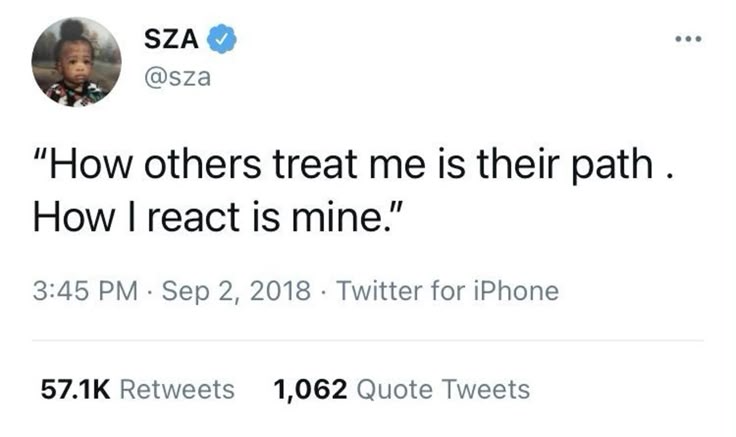
- Behavior of Others: Recognizing that their actions are a reflection of them, not you.
- Emotions of Others: Understanding that everyone experiences feelings differently, and you can’t manage theirs.
- The Past and Future: Accepting that you can’t alter past events or predict the future, but you can influence the present.
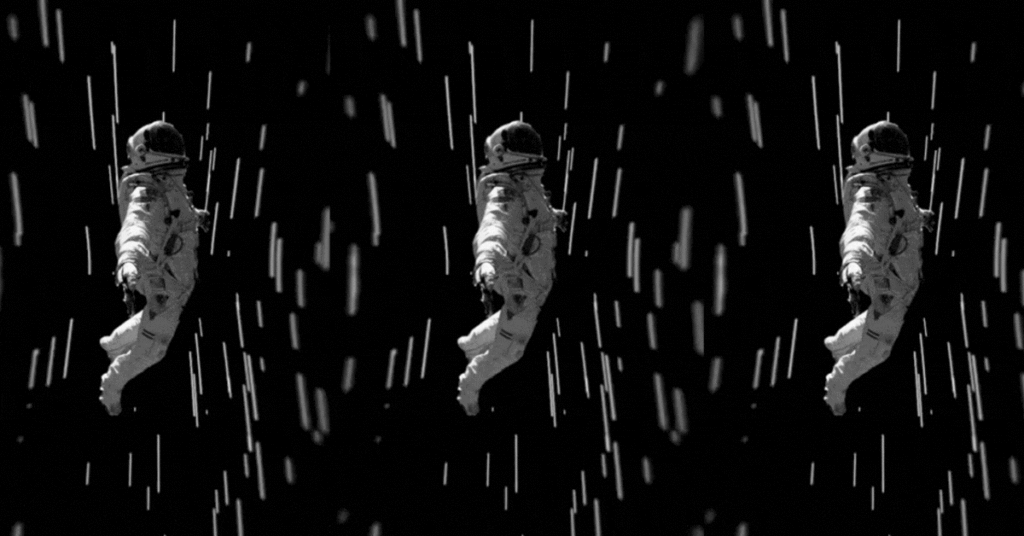
- The Universe: Knowing you can’t control the universe because it’s governed by vast, complex forces and natural laws that far exceed human influence.
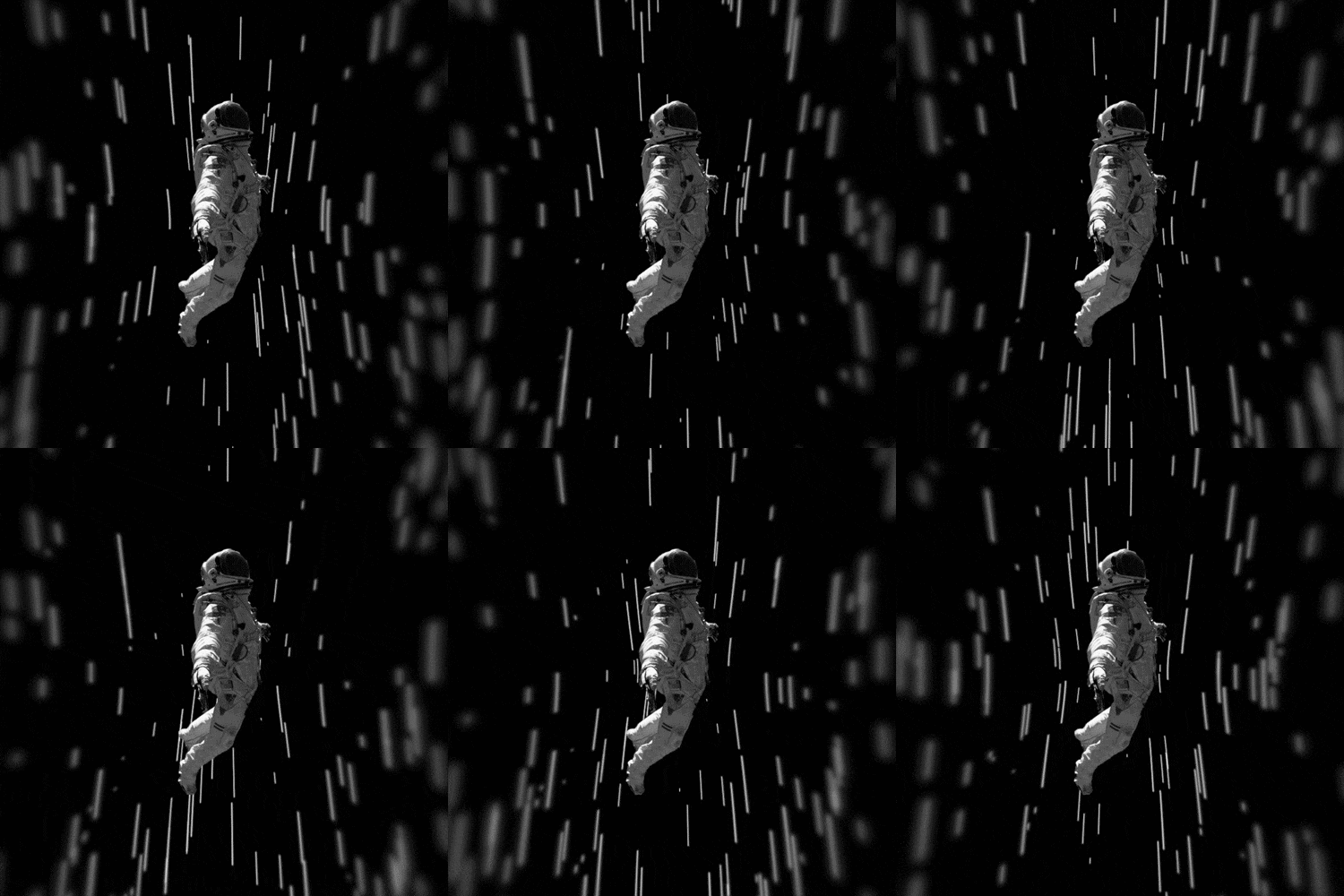
hurtling through space, obeying physics.
Still uncertain? Ask these 3 simple questions:
- Is this really about me?
- Is this their problem and not mine?
- Is this within my control?
Focusing on what you can control empowers you to navigate life positively and effectively, despite external uncertainties. Not sure that is? Here are some reminders that I find particularly helpful.
Things I Can Control:
- Kindness: Making a conscious effort to treat others with respect, compassion, and empathy.
- Attitude: Cultivating an optimistic outlook that positively influences your life.
- Response: Practicing pausing before reacting to manage situations with calmness and clarity.
- Seeking Council: Recognizing the need for support and asking for assistance.
- Self-Expression: Communicating openly and authentically, sharing true thoughts and emotions.
- Resilience: Recovering from setbacks by learning and growing through challenges.
- Boundaries: Establishing and maintaining limits that safeguard mental and emotional health.
- Thoughts & Decisions: Choosing thoughts that empower making decisions aligned with personal values.
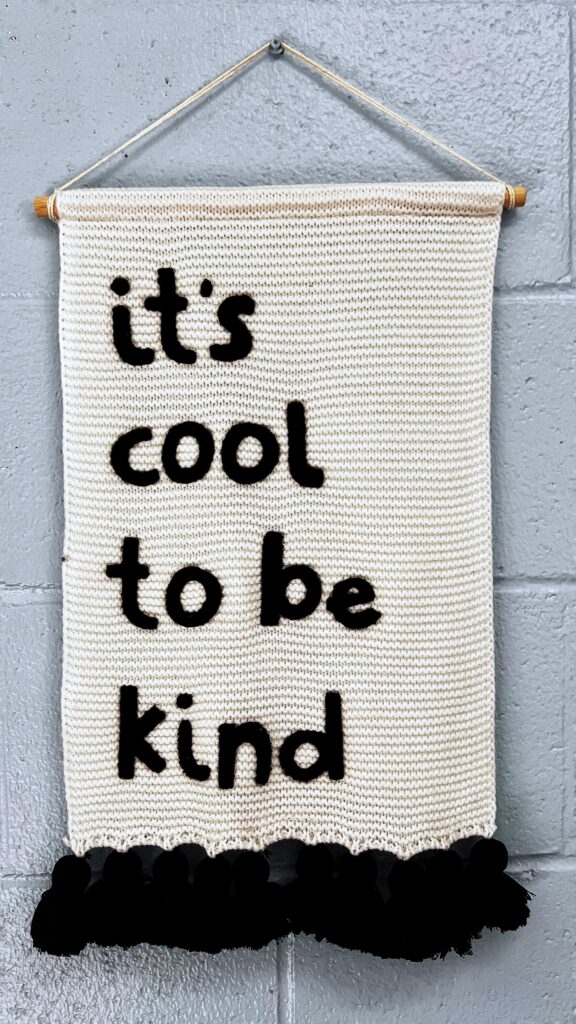
Practice Makes Progress
Stepping out of your comfort zone and setting new boundaries can feel disorienting. Striving for perfection and fearing failure are two sides of the same coin, often hindering progress. Meditation and mindfulness have helped me reframe my awareness around the things I can control. Through this growing awareness, I developed many practices.
Some resources were generated through personal exploration; others through pure desperation and a deep desire to change my state at the time. The reason each practice “stuck” and became a habit or tool is that they had a noticeable impact and worked to improve my well-being.
Below are some of the tools that I have found most helpful on my way here. My goal is to share accessible ways to manage stress. I cycle through these practices when I can feel my ability to cope becoming stagnant. Take what fits, disregard what does not. Every journey is made one small step at a time.
Practices to Consider:
Meditation and Mindfulness
Meditation and mindfulness are simple, grounding practices that help you slow down, tune in, and respond to life with more clarity and calm. From a few deep breaths and a quick body check-in to affirmations, daily meditation, and intentional kindness toward yourself and others, these moments build self-awareness, reduce anxiety, and strengthen your ability to stay centered, even when things feel hard.
- Take 3 Deep Breaths: Don’t forget to stretch while you’re at it | Need Help? Try this breathing visualizer or the box breathing tutorial below.
- Check in with yourself: Did you drink enough water? Did you eat any fruits and veggies? How is my posture? Is my jaw clenched?
- Positive Affirmations: I like to use a deck of affirmation cards to help center my intentions for the week. This week’s word I am focusing on is TRUST.
- Practice daily meditation: Will center your thoughts and reduce anxiety. Even just 5 minutes once a day, you will notice results!.
- Cultivate Kindness: How can I be kind today?
- Think of something you judge yourself for, and let it go.
- Think of something you judge others for, and try to see their perspective.
- Reaffirm a personal promise to be kind, no matter how harsh life gets.
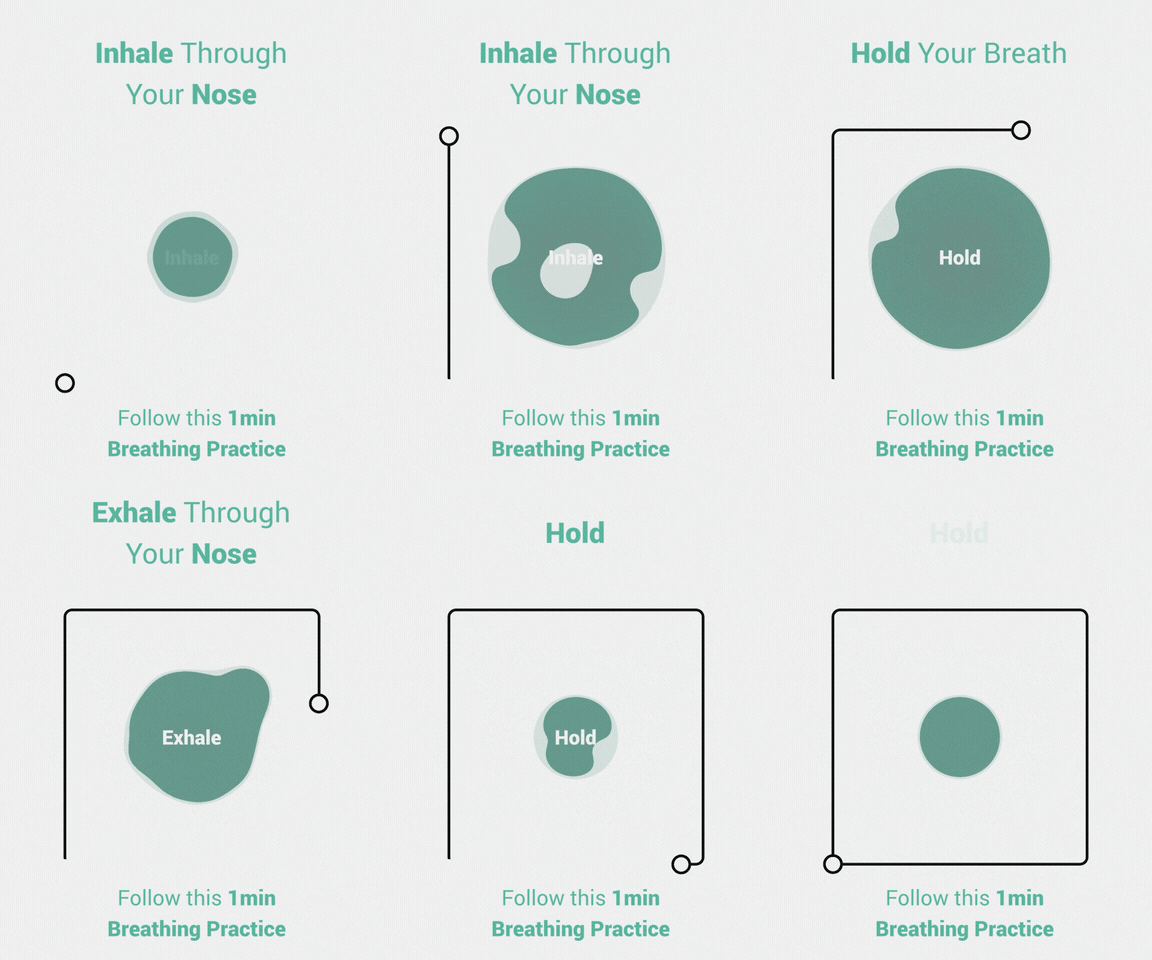
Breathe in 4, hold 4, breathe out 4, hold 4.
Repeat and let your body reset.
Recipe for a long and happy life
Being mindful and present isn’t just about the moment; it’s also about choosing a direction with purpose. Still, when our path leads us into the uncharted, it’s easy to feel unmoored. That’s why I’m drawn to photographer Ruth Bernhard’s “Recipe for a long and happy life”, a simple list of reminders that keeps me grounded:
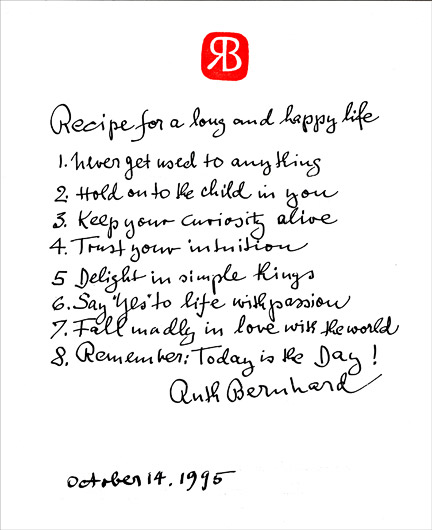
1. Never get used to anything
2. Hold on to the child in you
3. Keep your curiosity alive
4. Trust your intuition
5. Delight in simple things
6. Say “Yes” to life with passion
7. Fall madly in love with the world
8. Remember: Today is the Day!
For me, following the recipe means: staying awake to life instead of getting numb to it, honoring that little voice inside of you; endless curiosity; trusting your inner compass; gratitude; meeting life with an enthusiastic “yes!”; loving the world unabashedly; and acting now, because our time is never promised.
Positive Mindset
A positive mindset grows when your daily life supports you. Make choices that reduce friction, strengthen self-trust, and keep your focus on the next doable step. As your environment, relationships, and inner dialogue start working together, you’ll feel more grounded, capable, and ready to move forward.
- Speaking affirmations: Promotes a positive mindset and mental well-being.
- Updating bucket list: Reminds us our time is limited and we have a purpose
- Making a worry list: realize the things you can’t control – and let that shit go, bro.
- Counting Your Blessings: Make a literal list. We have so many reasons to be thankful.
- Organizing personal spaces: Facilitating small personal changes creates a catalyst for larger ones.
- Socializing: Engage with individuals/groups/communities who uplift your spirit
- Recognizing There’s Only One You: Accept and love yourself the way you are.
- Doing Something for the First Time: Start a new creative outlet, hobby, or healthy habit
- Rewarding Yourself: Create a reward for finishing or accomplishing a big item in your life. (Treat Yo Self!)

Sensory Experiences
Sensory experiences can quiet the nervous system quickly by creating a calm, controlled environment for your mind and body. Practices like floating offer deep relaxation, sensory relief, and a powerful space for meditation, especially when done consistently, while calming vibrations (therapeutic tones or nature sounds) and aromatherapy (like lavender) add simple, accessible ways to ease stress and support overall well-being.
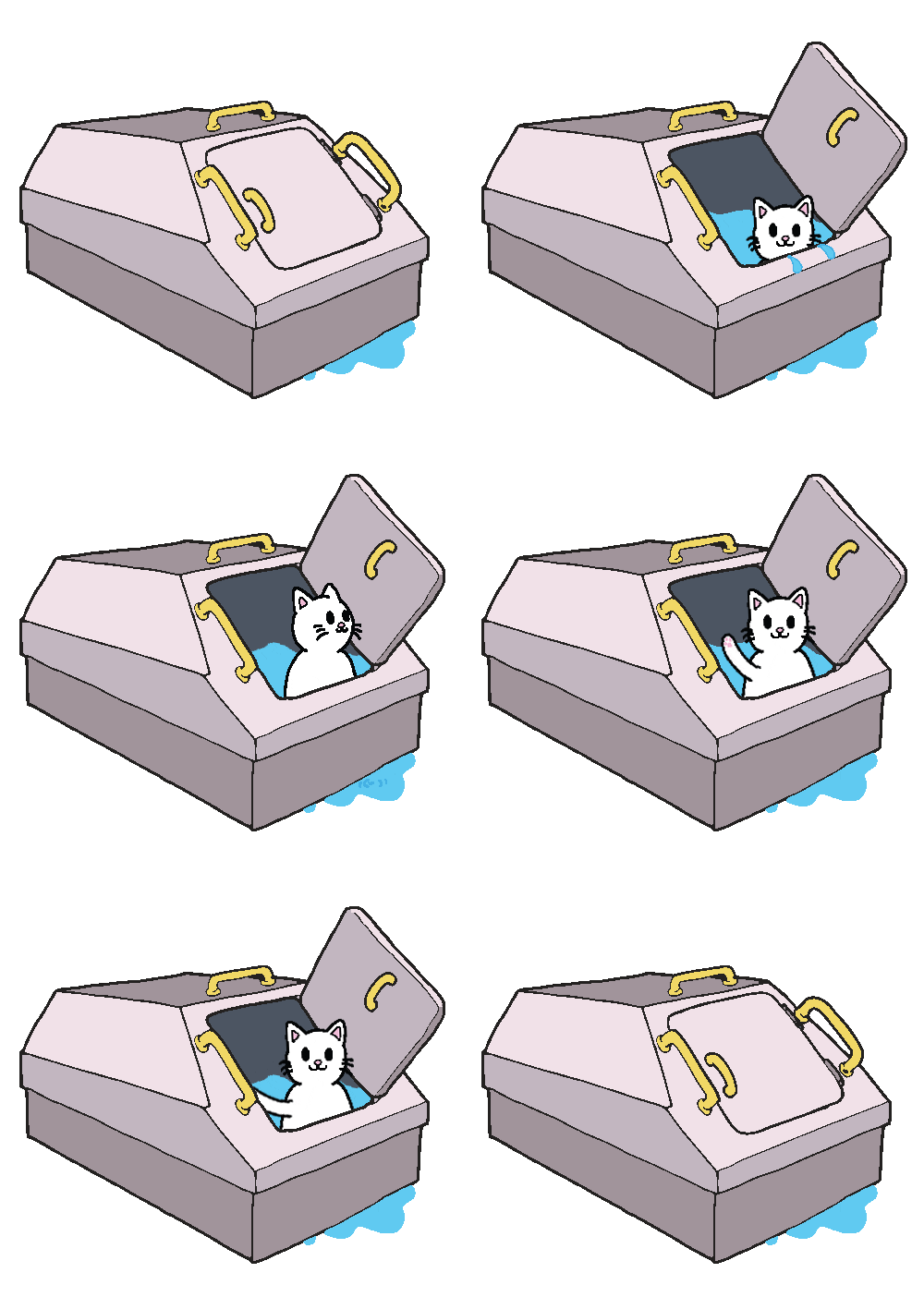
Yet it’s the most productive thing I do.
- Floating: Sensory deprivation floating changed my life. I utilize sessions for deep relaxation and sensory relief as well as a tool for heightened meditation. In my experience, floating in regular intervals dramatically increases its efficacy and is an extremely effective therapy and practice for managing stress, PTSD, as well as increasing general self-awareness and well-being.
- Decompressing with an Accupressure Mat: Lying on an acupressure mat for 10–30 minutes helps me release tension, slow my breathing, and quickly downshift my nervous system, especially after stressful days.
- Detoxing in Sauna: Sauna sessions help me reset through heat and stillness; supporting recovery, easing stress, and leaving me feeling clearer, calmer, and more grounded.
- Calming Vibrations: Listening to therapeutic audio tones, nature sounds, or other calming sounds to reduce stress.
- Aromatherapy: Diffusing personal space with soothing scents, such as lavender, to create a calming environment. (Try the DIY Air Diffuser Recipe Below!)
DIY Air Diffuser Recipe: (Click Arrow to Reveal)
Ingredients:
- 1/4 cup of witch hazel
- 15-20 drops of lavender and bergamot essential oil
- 3/4 cup of distilled water
- Gass spray bottle
Instructions:
- Prepare the Bottle: Clean the spray bottle thoroughly and ensure it’s dry.
- Add Witch Hazel: Pour 1/4 cup of witch hazel into the bottle. This acts as a preservative and helps the scent linger in the air longer.
- Add Essential Oil(s): Drop 15-20 drops of lavender and bergamot essential oils into the bottle with the witch hazel.
- Adjust the number of drops based on your scent preference. I prefer a lavender-forward mix
- Lavender and Bergamont are known for their soothing and uplifting properties, you can substitute for whatever oils you find calming.
- Add Distilled Water: Add 3/4 cup of distilled water to the bottle. This dilutes the mixture.
- Mix: Secure the lid and shake well to mix all the ingredients together.
Usage:
- Shake the bottle gently before each use to ensure the ingredients are well combined.
- Spray the mixture around your home to refresh the air and enjoy the calming scent of lavender. – Great for refreshing linens.
Creative Expression
Creative expression is a simple way to reset your mind and spark new ideas. Whether you’re making something (journaling, sketching, moving to music) or taking in what inspires you through museums, books, films, podcasts, or microlearning, these moments help you recharge, reflect, and return with a fresh perspective.
- Journaling, sketching, and creating art.
- Listening to favorite music and singing or dancing it out
- Visiting a museum/gallery and taking in art.
- Revisiting a book, film, or piece of art that inspired.
- Find a new source of inspiration to help cultivate new ideas – podcast, audiobook, microlearning
Some recent sources of inspiration:
Physical Activity
Physical activity helps you reconnect with your body, release built-up tension, and reset your mood. From gentle options like deep stretching, acupressure, sauna, and alignment work to movement like walking, hiking, biking, photo walks, workouts, or time outside with your pet, each choice supports stress relief, energy, and overall balance.
- Deep Streching
- Walking
- Hiking In Nature
- Walking with Dog
- Photo Walks
- Riding Bike
- Workouts
- Alignment with Chirp Wheel
(Check with a health professional when necessary)

I said it’s ‘watch Elmo do leg day’.
Wrapping Up:
Through regular and consistent engagement, these practices have led to a shift that has enabled me to manage situations and relationships better and let go of past grievances through outlets like journaling and creative expression. Stepping outside of my comfort zone into areas of physical activity has gently encouraged me to embrace change, even when I’ve been reluctant.
Letting go of what no longer serves and prioritizing well-being and embracing positive change has allowed me to ultimately lead a more fulfilling life. Over time, I’ve learned that embracing self-acceptance, trusting my instincts, and making confident decisions lead to reduced stress and increased personal happiness.