

An honest take on Adobe’s AI training, creative usefulness, and the limits of generated convenience.
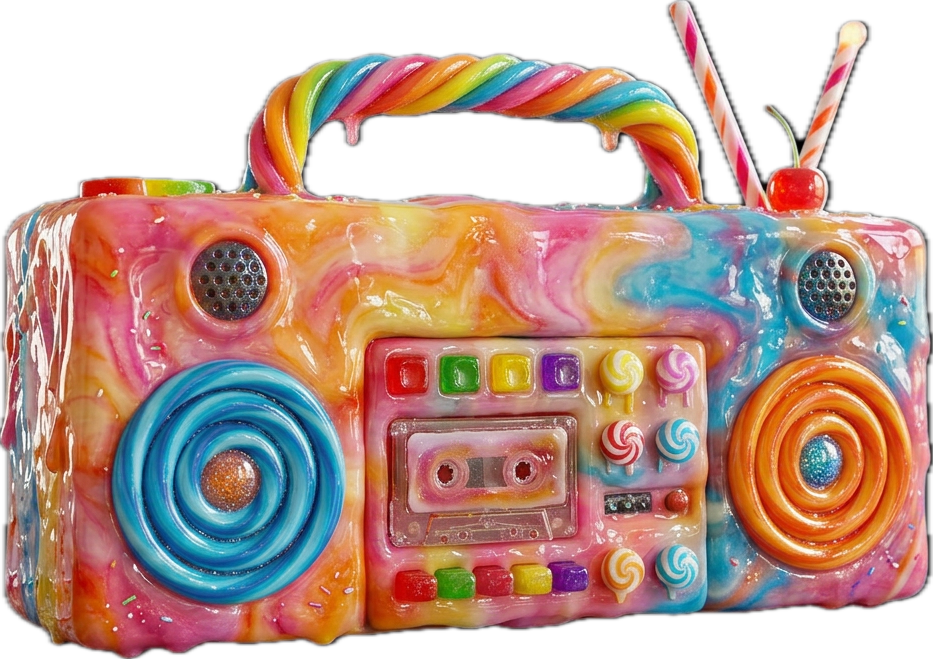
sweet nothings
Early in my creative life, I was using cracked versions of Lightroom and Photoshop. It was a nightmare.
Not just because it was unstable, though it often was. The bigger issue was that I was always working outside the intended ecosystem. When new features rolled out, when updates dropped, when workflows improved, I usually couldn’t take advantage of any of it. I was using the tools, technically, but never really participating in the platform the way it was designed to be used.
The reason was simple: Adobe licenses were expensive. After already investing heavily in camera equipment, software felt like yet another gate between me and the ideas I wanted to pursue. The possibilities felt limitless, but access to the tools absolutely was not.
When Creative Cloud first launched, I bought in early. At the time, it felt like the only realistic way to close the gap between what I wanted to make and what I could actually execute. For a while, my mindset was simple: make up for lost time. Learn the tools I had been locked out of. Build the workflows I couldn’t before. Catch up.
Of course, solving one bottleneck just revealed another. Once I had legitimate access to the software, the next issue became hardware: rendering times, graphics cards, processing power. But that is another article.
Part of keeping my skills current means trying to stay familiar with new Adobe tools as they launch, even if that has become harder as the ecosystem gets more segmented, more branded, and more bloated. That is what led me to complete the Adobe Firefly training on LinkedIn Learning.
The training path included Adobe Firefly Essential Training, modules on tips and production techniques, and lessons on using Firefly with Photoshop, along with broader coursework around Adobe Firefly, artificial intelligence for design.
I am definitely not sold on AI tools, but I would rather reach an informed opinion than a lazy one. If I am going to criticize something, I want to understand how it works first.
What the training felt like
The training was polished, accessible, and easy enough to move through. But more than anything, it felt like it was developed by a marketing department rather than by people focused on operations, workflow, or actual creative development.
That was my biggest issue with it.
I don’t want to be sold a tool. I want to be trained on a tool. Then I can decide its value by how I integrate it into my workflow. If you have to spend that much time convincing me something matters, it starts to feel less like professional education and more like an infomercial. It gives off strong “as seen on TV” energy, which is rarely a sign that the product itself is all that strong.
The course does explain the basics: prompt-based image generation, generative fill, variations, and the broader framing of Firefly as a creativity-enhancing assistant. But the tone is hard to ignore. It feels less like, “Here is what this does and where it fits,” and more like, “We invested so much in this that it has to work, so here is why you should be excited.”
I would not discourage anyone from taking the training, because there are useful insights that help you understand Firefly and use it more effectively. But it also comes with a pretty heavy sales pitch, and by the end of it, I still came away feeling like the tool itself is ultimately not that useful.


Making digital stickers from old pet photos was a fun way to learn how to refine prompts
Where my criticism starts
My criticism of Firefly is not just about the sales pitch or overall mediocre output. It is about what the tool represents and what Adobe seems willing to normalize to stay competitive in the AI race.
Adobe built its reputation by becoming essential to artists, photographers, designers, and creative professionals. That history matters. Which is why it feels especially bleak to watch the company move deeper into AI while so many creatives are being asked to accept systems that feel built on extraction more than support.
The company built by artists is now exploiting them. That is the part that is hardest to ignore.
There is something deeply unsettling about a creative software company scanning user content, studying the output of the people who built its platform value, and turning that into systems designed to generate more content, faster, cheaper, and with less human labor involved. However carefully that gets packaged, the truth is still there.
As a creative, that can feel beyond comprehension at times. You spend years developing taste, skill, patience, and perspective, only to be told that what matters now is speed, automation, and scalable output.

know your value
What I learned
At the risk of sounding like a walking contradiction, the biggest thing I learned is that Firefly does have some practical value, but that value is much narrower than the heavy-handed marketing suggests.
It works best as a support tool. It can help with speed, rough ideation, and low-stakes visual generation. It is useful for placeholders, filler media, and quick-turn content where the image just needs to exist and do a job.
It becomes less impressive the more specific your taste is, the more intentional your work is, or the more you care about authorship. A lot of what it produces is visually competent but conceptually thin. Usable, sometimes attractive, occasionally interesting, but rarely memorable.
That does not make it worthless. It just makes it far less revolutionary than it is being sold as.
Where Firefly actually fits for me
This is where I have to be fair.
I have used Firefly to generate images, and I am including some of those results because I think it is important to show what the tool can actually do instead of speaking in pure theory. I have also used some of what I generated on my blog while experimenting with the platform and trying to understand where it fits in my workflow.


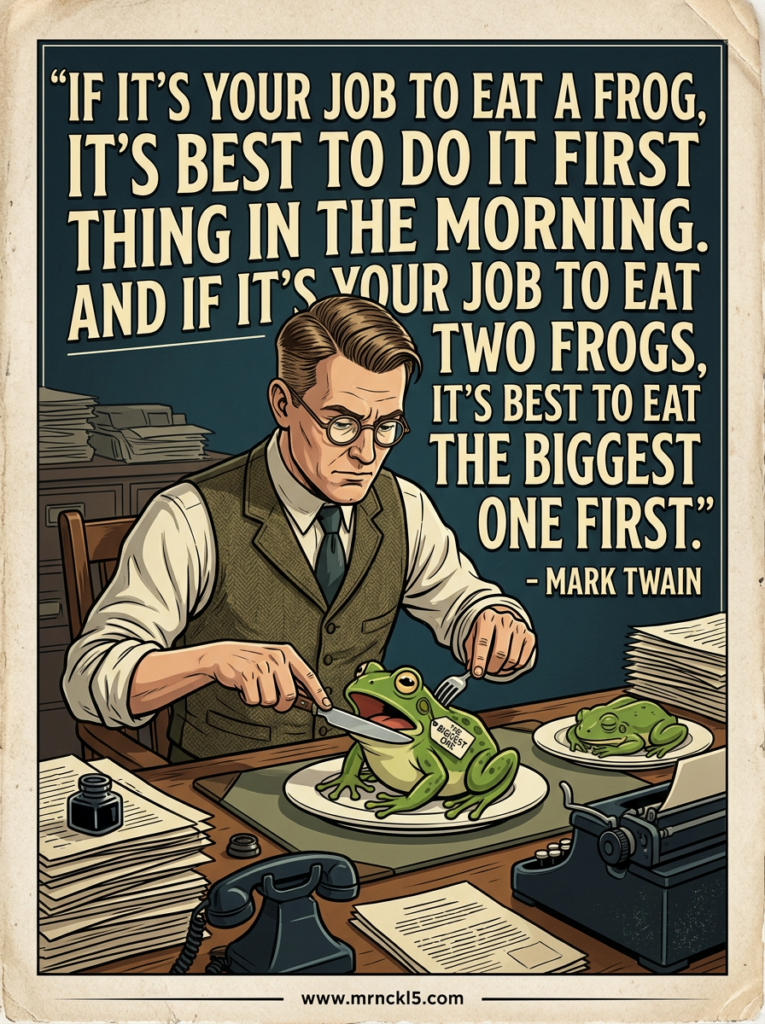
Artwork generated for recent blog post: ‘Eat the Frog, End the Negotiation’
If I need something for a random social media post, a newsletter article, or a blog image where sourcing stock photography is either too expensive or too time-consuming, I can see the appeal. In those moments, it works. But filling a gap and making something meaningful are not the same thing.
For me, that fit is limited but not nonexistent.
| USE CASE | PROVIDES | VALUE |
|---|---|---|
| Social media filler | Quick visual for a content calendar | Practical, not exciting |
| Newsletter art | Useful when stock images are hard to find or too expensive | Practical, not exciting |
| Blog support images | Helps when I need something fast for an article or experiment | Practical, not exciting |
| Early ideation | Can generate starting points for a concept | Limited, but servicable |
| Finished creative work | Doesn’t provide authorship | Useless |
Final Verdict: Firefly is more useful for visual support than for meaningful creative output.
AI, in general
I am not interested in pretending these tools do not exist. I am also not interested in embracing them just because the industry insists that I should. The responsible thing, at least for me, is to learn them well enough to judge them honestly. That is what I am trying to do.
Right now, my conclusion is that AI tools like Firefly offer convenience, but often at the expense of human ingenuity, authorship, and depth. For a significant investment, the results are often middling. They may save time. They certainly fill space. They may even solve a temporary content problem. But they rarely feel essential.
And that may be the central problem: we are being asked to treat efficiency as if it were the same thing as creativity.
It isn’t.
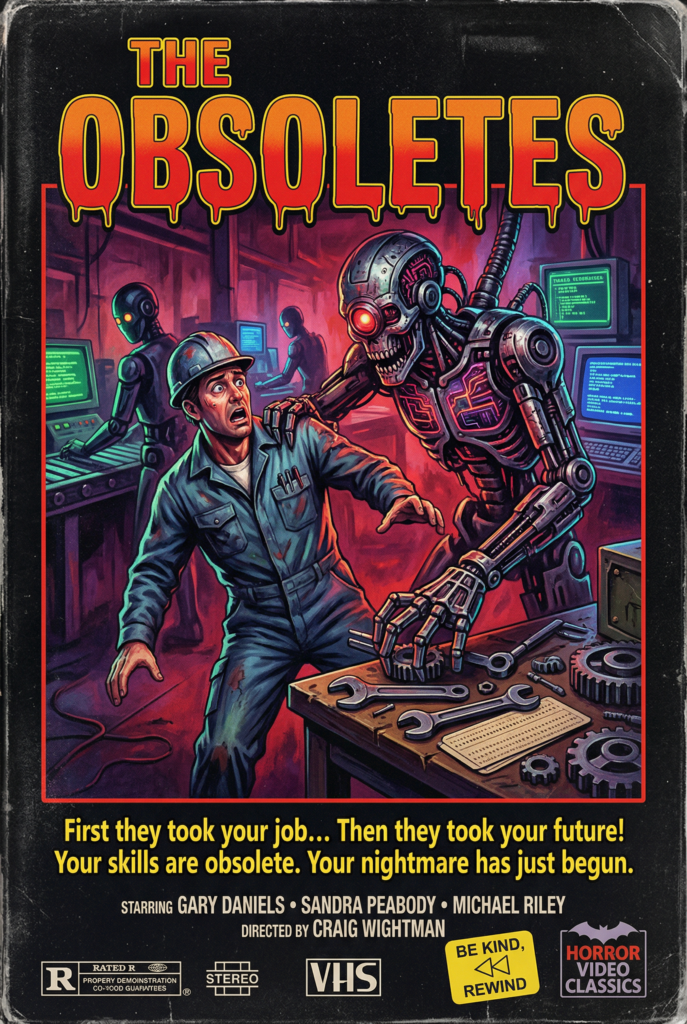


The fear of being made redundant, illustrated by redundant algorithms
Final thoughts
I took the Adobe Firefly certification because I wanted an informed opinion. Now I have one.
Firefly is not useless. It has practical applications, especially for filler media, experimental blog visuals, newsletter artwork, and quick-turn content needs. I have used it for exactly those reasons, and I will probably continue to experiment with it in that limited capacity.
But as a serious creative tool, I remain unconvinced. As a training experience, it felt overly marketed. As part of Adobe’s broader AI direction, it raises more ethical concerns than creative excitement for me.
I learned enough about Firefly to understand the tool. I am still not convinced that the platform, or its creators, understand creativity.